
The educational materials provided in the following webpages are intended for patients who have been prescribed a medicinal product supplied by Generic Health by their treating doctors. By entering this website, you agree that you are a patient who is currently using or about to use a medicinal product supplied by Generic Health for a condition that has been diagnosed by your treating doctor.
By continuing, you understand that the educational materials are provided herewith to assist you to use Generic Health’s product correctly as it is intended.
Please always read the Consumer Medicine Information (CMI), instruction manual or pack insert, as applicable, supplied with your medicine in full before use. For any medical information queries or to report an adverse event, please contact Generic Health on +61 (0)3 9809 7900 or by email at customer.service@generichealth.com.au.
Click here to confirm you understand and agree with the terms and conditions above



For more detailed information, please refer to the links below

Pack Details
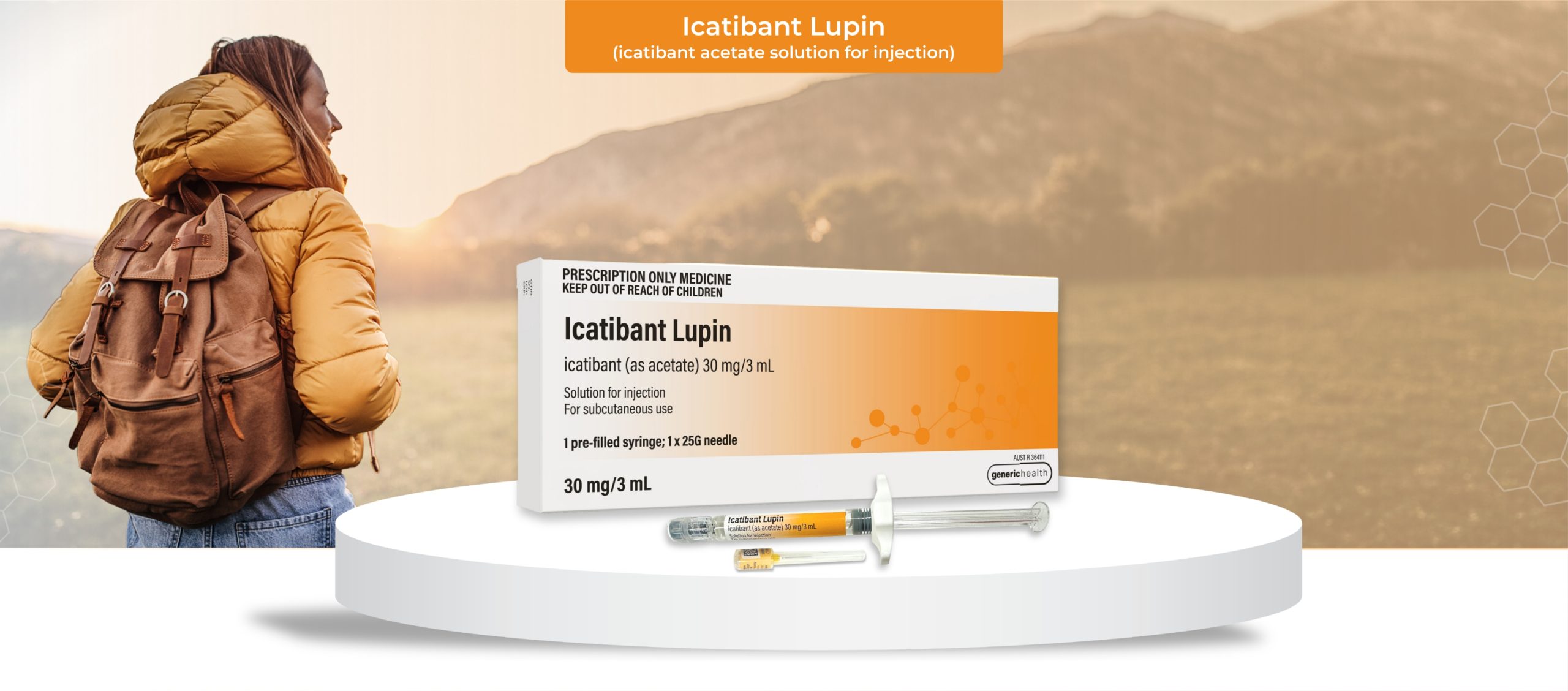
Icatibant Lupin is supplied as pack of one single use pre-filled glass syringe and one needle.
- The ready-to-use pre-filled syringe contains 30 mg icatibant (as acetate) in 3 mL sterile solution for injection.
- A 25 gauge, 16 mm needle is included in the pack and needs to be attached to the syringe before use.
- Each syringe must be used only once.
- The solution inside the syringe must be clear and colourless and free from visible particles.
Important Safety Precautions

DO NOT use Icatibant Lupin if:

You are allergic to icatibant acetate, or any of the ingredients listed at the end of this leaflet.
Some of the symptoms of an allergic response may include:

Shortness of breath, wheezing or difficulty breathing;

Swelling of the face, lips, tongue or other parts of the body;

Skin rash, itching or hives.

The expiry date printed on the pack has passed or if the packaging is torn or shows signs of tampering.

There are any visible signs of deterioration (e.g. if the solution is cloudy, if it has floating particles, or if the solution is not colourless).
Looking after Icatibant Lupin

Keep Icatibant Lupin in the pack until it is time to use it.

Keep Icatibant Lupin in a cool dry place where the temperature stays below 25°C.

Do not freeze.

Keep it away from moisture, heat or sunlight.

Do not store it in the bathroom, near a sink, in the car or on window sills.
Instructions for Use
General Information
- Clean the work area (surface) to be used before beginning the process.
- Wash your hands with soap and water.
- Remove the pre-filled syringe from the tray.
- Unscrew the cap from the end of the pre-filled syringe.
- After unscrewing the cap, place the pre-filled syringe on the work area.
A. Preparing the syringe and needle
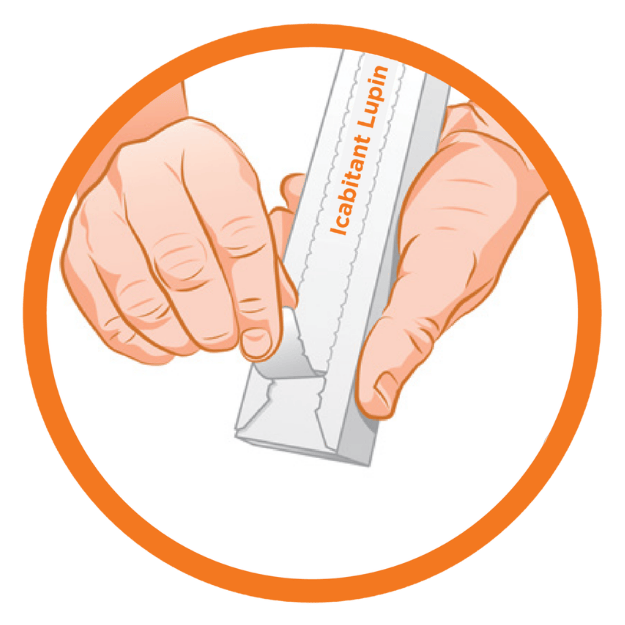
1.
Remove the needle cap from the blister tray.
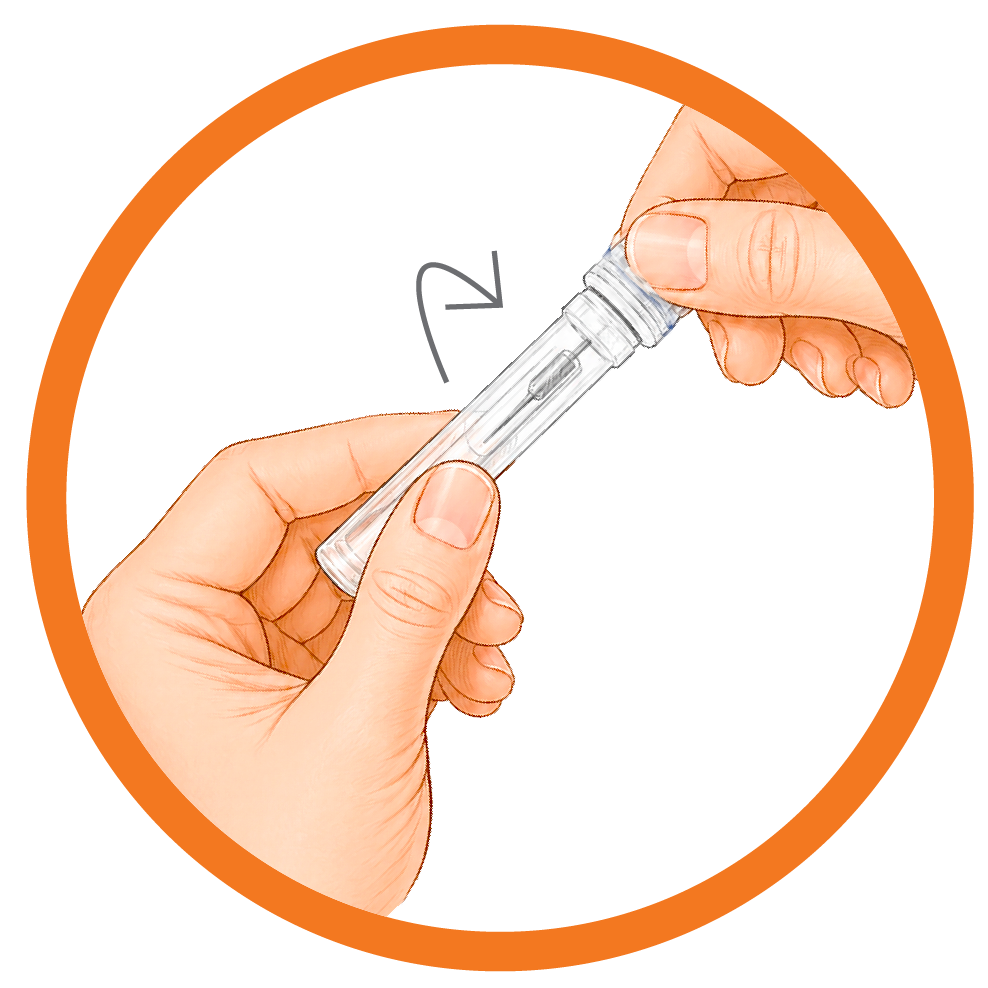
2.
Twist the lid of the needle cap to break the seal (the needle should be still in the needle cap).
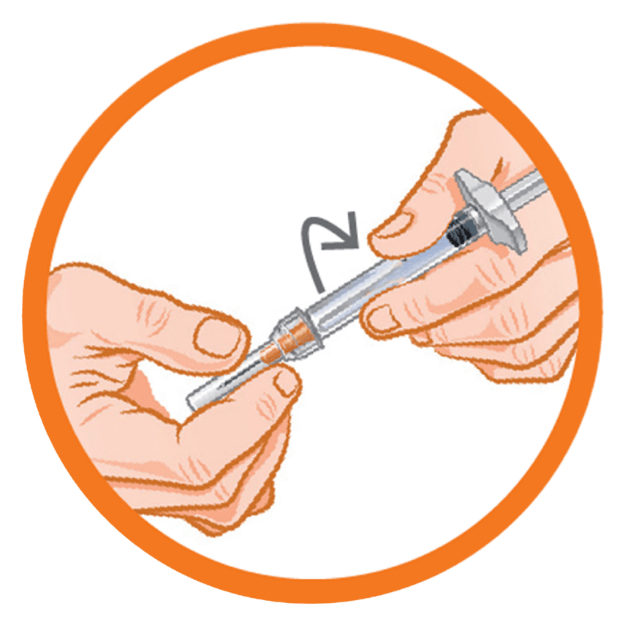
3.
Grip the syringe firmly. Carefully attach the needle to the syringe containing the colourless solution.
4.
Screw the syringe (still fixed in the needle cap) onto the syringe.
5.
Remove the needle from the needle cap by pulling the syringe. Do not pull up on the plunger.

1.
Choose the injection site. The injection site should be a
skin fold on your abdomen (tummy), approximately 5 to 10
cm below your navel (belly button) on either side. This
area should be at least
5 cm away from any scars. Do
not
choose an area that is bruised, swollen, or painful.
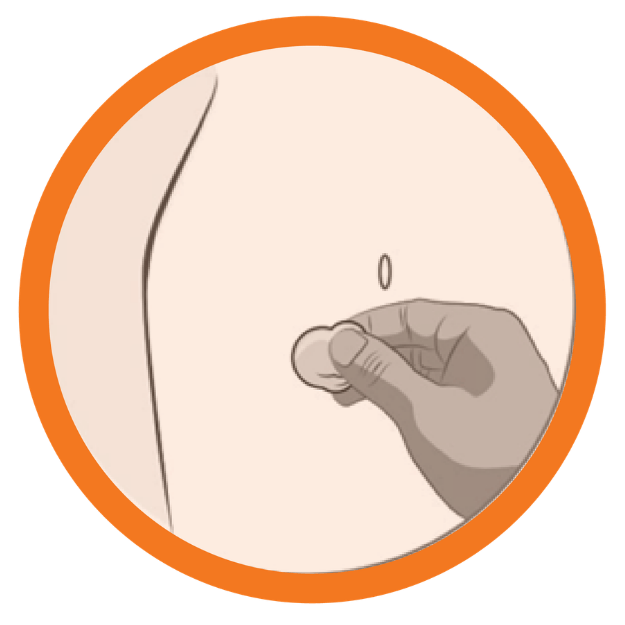
2.
Clean the injection site with an alcohol wipe and allow it to dry.
1.
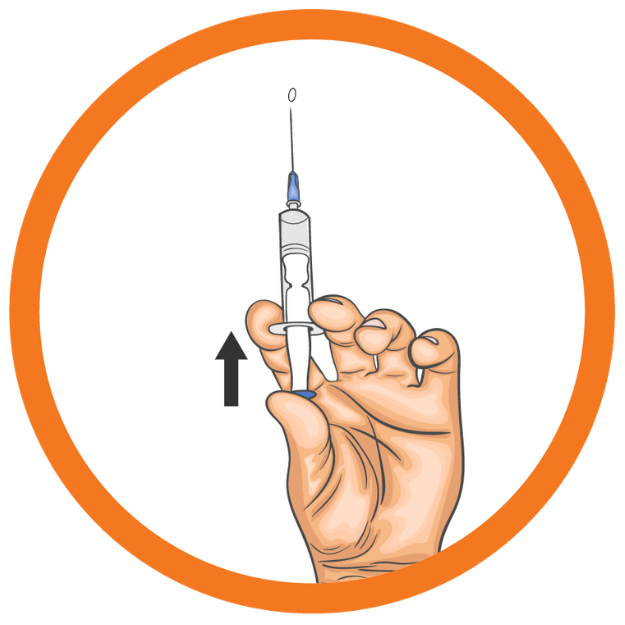
Hold the syringe in one hand between two fingers with your thumb at the bottom of the plunger.
2.
Make sure that there are no air bubbles in the syringe by pressing the plunger until the first drop appears on the tip of the needle.
3.
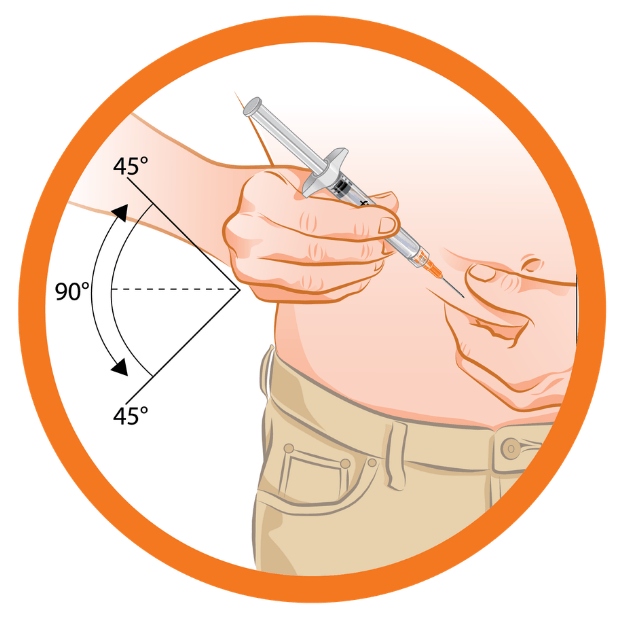
Hold the syringe between a 45 to 90 degree angle to your skin with the needle facing the skin.
4.
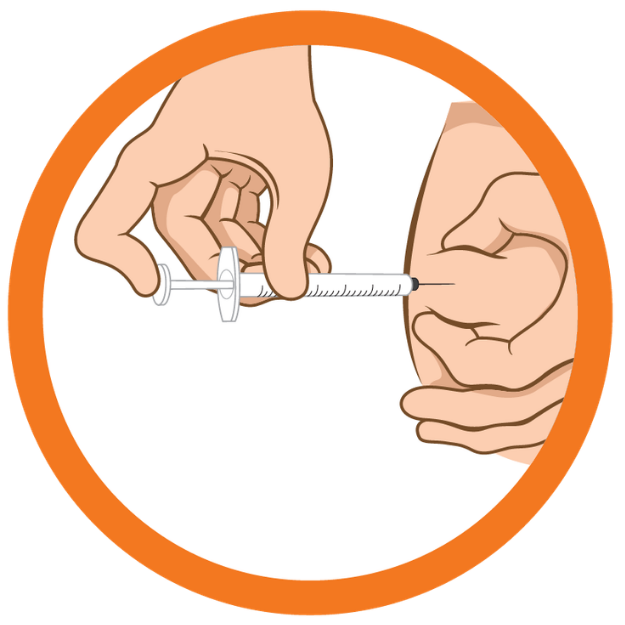
Keeping the syringe in one hand, use your other hand to gently hold a fold of skin between your thumb and fingers at the previously disinfected injection site.
5.
Hold the fold of the skin, bring the syringe to the skin and quickly insert the needle into the skin fold.
6.
Slowly push the plunger of the syringe with a steady hand until all the solution is injected into the skin and no liquid remains in the syringe.
7.
Press slowly so that this takes approximately 30 seconds.
8.
Release the skin fold and gently pull the needle out.
1.
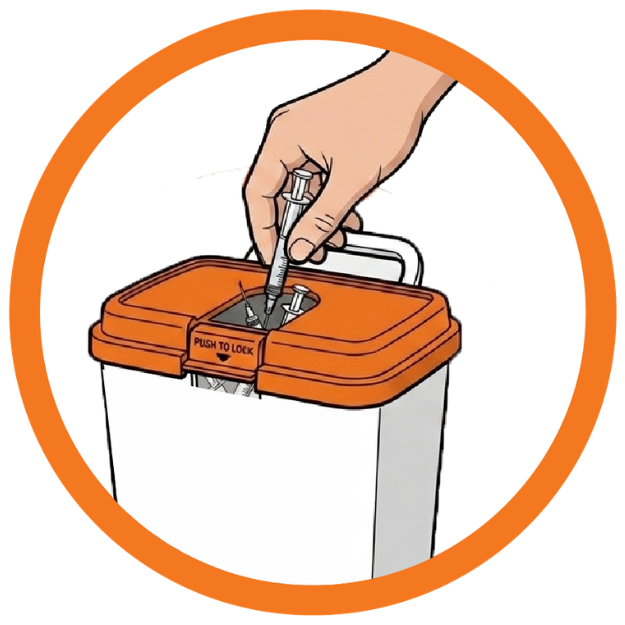
Discard the syringe, needle and needle cap into the sharps container.
2.
Ask your pharmacist if you are not sure about the right way to throw away used syringes and needles.
B. Preparing the injection site
1.
Remove the needle cap from the blister tray.
2.
Twist the lid of the needle cap to break the seal (the needle should be still in the needle cap).
3.
Grip the syringe firmly. Carefully attach the needle to the syringe containing the colourless solution.
4.
Screw the syringe (still fixed in the needle cap) onto the syringe.
5.
Remove the needle from the needle cap by pulling the syringe. Do not pull up on the plunger.
1.
Choose the injection site. The injection site should be a
skin fold on your abdomen (tummy), approximately 5 to 10
cm below your navel (belly button) on either side. This
area should be at least
5 cm away from any scars. Do
not
choose an area that is bruised, swollen, or painful.
2.
Clean the injection site with an alcohol wipe and allow it to dry.
1.
Hold the syringe in one hand between two fingers with your thumb at the bottom of the plunger.
2.
Make sure that there are no air bubbles in the syringe by pressing the plunger until the first drop appears on the tip of the needle.
3.
Hold the syringe between a 45 to 90 degree angle to your skin with the needle facing the skin.
4.
Keeping the syringe in one hand, use your other hand to gently hold a fold of skin between your thumb and fingers at the previously disinfected injection site.
5.
Hold the fold of the skin, bring the syringe to the skin and quickly insert the needle into the skin fold.
6.
Slowly push the plunger of the syringe with a steady hand until all the solution is injected into the skin and no liquid remains in the syringe.
7.
Press slowly so that this takes approximately 30 seconds.
8.
Release the skin fold and gently pull the needle out.
1.
Discard the syringe, needle and needle cap into the sharps container.
2.
Ask your pharmacist if you are not sure about the right way to throw away used syringes and needles.
C. Injecting Icatibant Lupin
1.
Remove the needle cap from the blister tray.
2.
Twist the lid of the needle cap to break the seal (the needle should be still in the needle cap).
3.
Grip the syringe firmly. Carefully attach the needle to the syringe containing the colourless solution.
4.
Screw the syringe (still fixed in the needle cap) onto the syringe.
5.
Remove the needle from the needle cap by pulling the syringe. Do not pull up on the plunger.
1.
Choose the injection site. The injection site should be a
skin fold on your abdomen (tummy), approximately 5 to 10
cm below your navel (belly button) on either side. This
area should be at least
5 cm away from any scars. Do
not
choose an area that is bruised, swollen, or painful.
2.
Clean the injection site with an alcohol wipe and allow it to dry.
1.
Hold the syringe in one hand between two fingers with your thumb at the bottom of the plunger.
2.
Make sure that there are no air bubbles in the syringe by pressing the plunger until the first drop appears on the tip of the needle.
3.
Hold the syringe between a 45 to 90 degree angle to your skin with the needle facing the skin.
4.
Keeping the syringe in one hand, use your other hand to gently hold a fold of skin between your thumb and fingers at the previously disinfected injection site.
5.
Hold the fold of the skin, bring the syringe to the skin and quickly insert the needle into the skin fold.
6.
Slowly push the plunger of the syringe with a steady hand until all the solution is injected into the skin and no liquid remains in the syringe.
7.
Press slowly so that this takes approximately 30 seconds.
8.
Release the skin fold and gently pull the needle out.
1.
Discard the syringe, needle and needle cap into the sharps container.
2.
Ask your pharmacist if you are not sure about the right way to throw away used syringes and needles.
D. Disposal of injection material
1.
Remove the needle cap from the blister tray.
2.
Twist the lid of the needle cap to break the seal (the needle should be still in the needle cap).
3.
Grip the syringe firmly. Carefully attach the needle to the syringe containing the colourless solution.
4.
Screw the syringe (still fixed in the needle cap) onto the syringe.
5.
Remove the needle from the needle cap by pulling the syringe. Do not pull up on the plunger.
1.
Choose the injection site. The injection site should be a
skin fold on your abdomen (tummy), approximately 5 to 10
cm below your navel (belly button) on either side. This
area should be at least
5 cm away from any scars. Do
not
choose an area that is bruised, swollen, or painful.
2.
Clean the injection site with an alcohol wipe and allow it to dry.
1.
Hold the syringe in one hand between two fingers with your thumb at the bottom of the plunger.
2.
Make sure that there are no air bubbles in the syringe by pressing the plunger until the first drop appears on the tip of the needle.
3.
Hold the syringe between a 45 to 90 degree angle to your skin with the needle facing the skin.
4.
Keeping the syringe in one hand, use your other hand to gently hold a fold of skin between your thumb and fingers at the previously disinfected injection site.
5.
Hold the fold of the skin, bring the syringe to the skin and quickly insert the needle into the skin fold.
6.
Slowly push the plunger of the syringe with a steady hand until all the solution is injected into the skin and no liquid remains in the syringe.
7.
Press slowly so that this takes approximately 30 seconds.
8.
Release the skin fold and gently pull the needle out.
1.
Discard the syringe, needle and needle cap into the sharps container.
2.
Ask your pharmacist if you are not sure about the right way to throw away used syringes and needles.
Icatibant Lupin 30 mg/3 mL solution for injection (pre-filled syringe) is a Prescription medicine, used to treat acute attacks of hereditary angioedema (HAE) in adults, adolescents, and children aged 2 years and older with C1‑esterase inhibitor deficiency. Icatibant Lupin has risks and benefits, ask your doctor if this medicine is right for you. If symptoms continue or you have side effects, see your healthcare professional. Consumer Medicine Information (CMI) can be found on this webpage or at www.medsafe.govt.nz .
TAPS-BG6250